Different Types of Ghee in Nepal
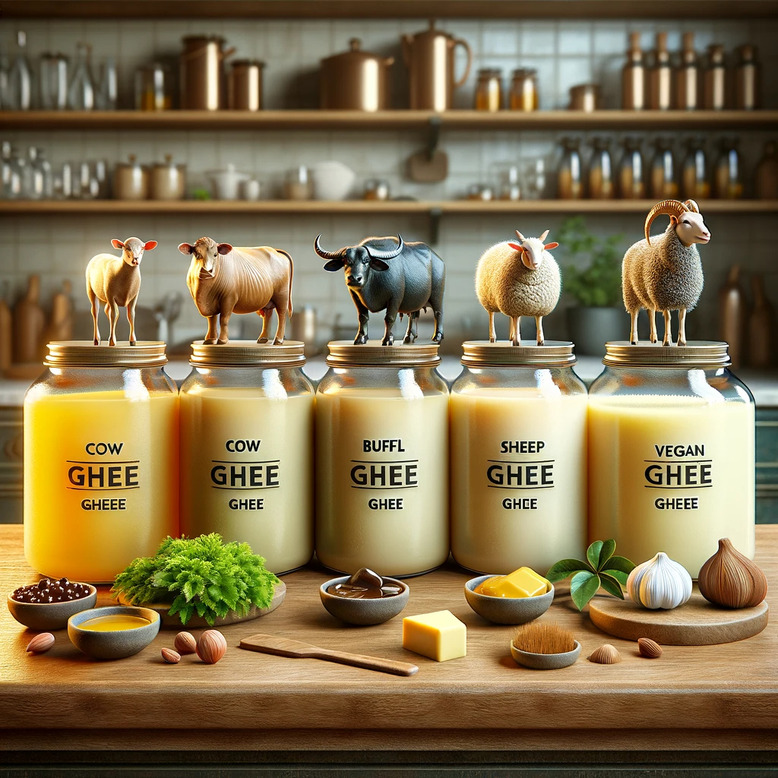
Ghee holds a significant place in Nepali cuisine and culture, with various types offering distinct flavors, textures, and benefits. Here’s a look at the different kinds of ghee found in Nepal:
Cow Ghee
Cow ghee is revered in Nepal for its richness in flavor and health benefits. Sourced from cow's milk, it is often associated with traditional Ayurvedic practices and is widely used for cooking, rituals, and medicinal purposes. Cow ghee is known for its golden color and smooth texture.
Buffalo Ghee
Buffalo ghee is creamier and richer than cow ghee due to its higher fat content. It’s commonly used in regions where buffalo farming is prevalent. Its thick consistency makes it a preferred choice for hearty dishes and desserts, providing a robust flavor and added nutrition.
Yak/Chauri Ghee
In the Himalayan regions, yak or chauri ghee (a hybrid of cow and yak) is cherished for its unique taste and warming properties. This ghee is highly nutritious and is often consumed by locals to combat the cold. Its strong, earthy flavor makes it distinct from other types of ghee.
Banaspati Ghee
Banaspati ghee is a plant-based alternative, typically made from hydrogenated vegetable oils. While it's not true ghee, it is often used as a more affordable substitute in cooking. However, it lacks the nutritional value and rich taste of animal-derived ghee.
Goat Ghee
Goat ghee is less common but holds a special place in certain parts of Nepal. It is lighter and more easily digestible compared to cow or buffalo ghee. With its mild taste and numerous health benefits, goat ghee is gaining popularity among health-conscious consumers.
Each type of ghee offers unique flavors and benefits, catering to diverse preferences and regional needs. Whether for daily cooking, medicinal use, or ceremonial purposes, the variety of ghee in Nepal ensures that there’s something for everyone.